
My son’s 8th grade group chat is debating Roth IRAs. It’s a conversation worth having — even if it started on TikTok.
Investing curiosity has never been this contagious — and honestly, I love it.
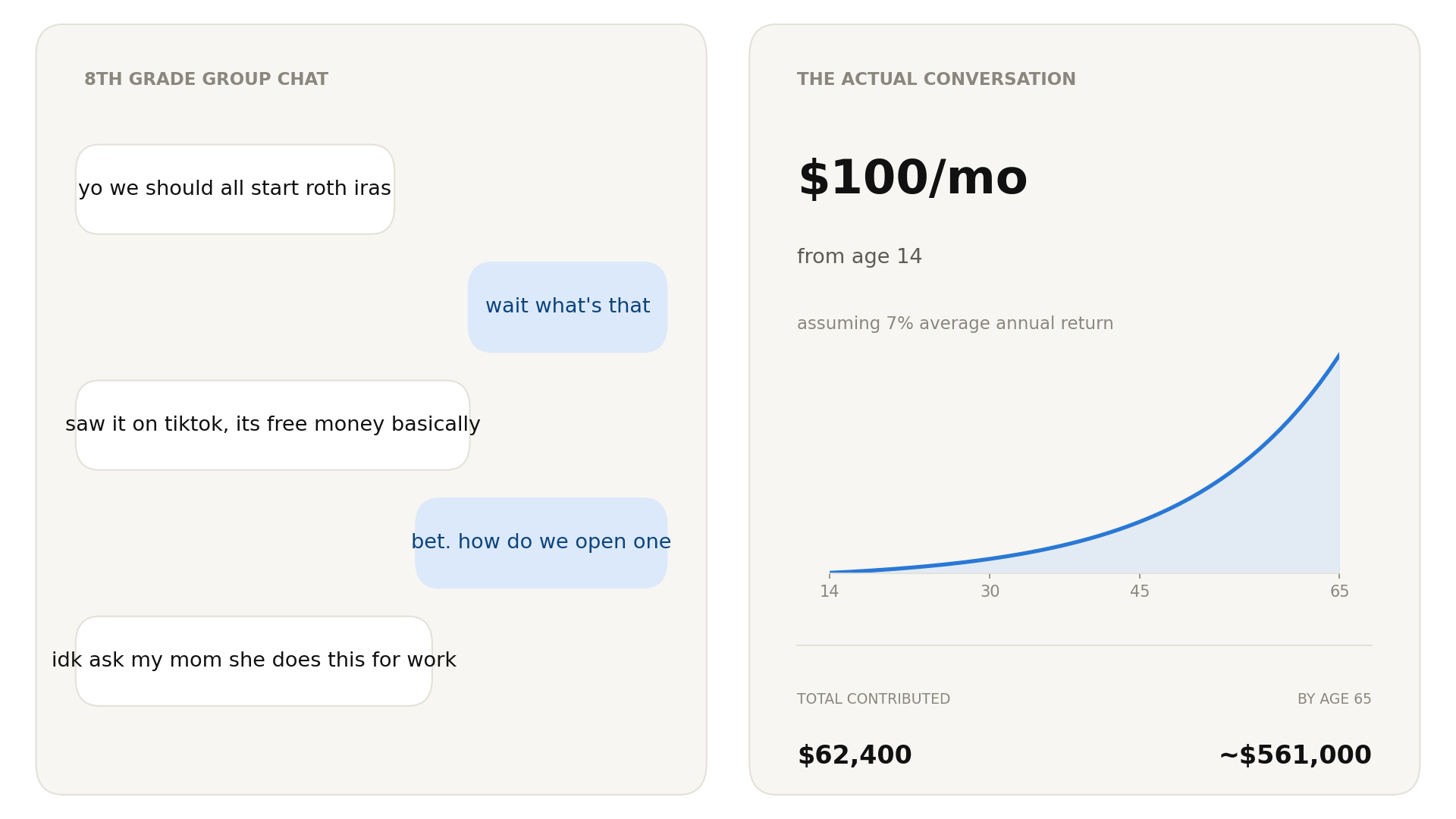
Last week my 14-year-old, an 8th grader, came to me because his friend group chat had spent the afternoon debating something I didn’t expect from a bunch of middle schoolers: whether they should open a Roth IRA. The math wasn’t quite right (and you need earned income to contribute, for starters), but he brought it to me anyway, and we spent an hour talking through compounding, time horizons, and what “starting early” actually looks like in real numbers.
That’s the upside of what’s happening on TikTok and YouTube right now. A recent Wall Street Journal review of 212 finance accounts found a wave of creators pushing genuinely solid habits — index funds, Roth IRAs, living within your means. Fidelity even credits this wave of content with a 73% jump in Gen Z Roth IRA contributions over the past year.
But there’s a catch. FINRA’s research found something concerning: people who get their investing advice from social media rate their own financial knowledge higher than people who don’t, yet they score worse on objective literacy tests and are more susceptible to investment fraud.
Another risk of getting investing advice from TikTok and social media is that these accounts often encourage over-trading, which leads to higher fees, underperformance, and exposure to undisclosed promotions. Many creators also lack formal credentials: one analysis found that 74% of finance creators studied did not clearly state their professional credentials, and a separate Wall Street Journal review found more than half of the TikTok accounts examined held no financial advisory license or certification.
Beyond credentials, these creators typically ignore your personal financial context and owe you no fiduciary duty. Social media financial influencers are not required to have a license or credentials, and unlike financial professionals, they can’t be held accountable when their advice is wrong. Yet they often project flashy displays of wealth that manufacture FOMO, pushing viewers toward decisions that don’t fit their own situation.
Bloomberg’s reporting adds another layer. Strategies once reserved for hedge funds and ultra-wealthy families — tax-loss harvesting, long-short investing, exchange funds — are now being marketed to everyday investors online. They can be powerful tools. They can also carry fees, complexity, and multi-year lock-ins that make them a poor fit for smaller portfolios, a point even some of the influencers promoting them will admit on camera.
None of this means turn off the apps. It means bring the questions to a real conversation. That’s exactly what I did with my son — and it’s the kind of conversation we love having with clients and their families every day: turning curiosity into an actual plan.
What’s the youngest age you’ve seen a client’s kid ask a genuinely sharp money question?
Meg Connelly, CIO